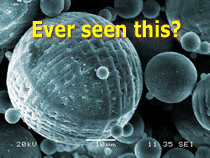
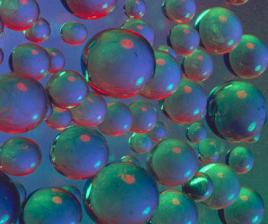
Made from a water-resistant and chemically-stable soda- limeborosilicate glass, these hollow glass microspheres can be used as a low-density filler material ideal for plastic and rubber parts created from injection molding, extrusion processes and/or other vigorous processing equipment (Banbury mixers, etc.). Glass bubbles help to reduce weight; reduce noise, vibration and harmonics; reduce thermal expansion; and contribute to cost savings. They are ideal additive materials in the automotive, truck, rail and aerospace industries.
Typical Properties
Isostatic crush strength (psi): 10,000 psi
True density: 0.60 g/cc
Packing factor (bulk density to true particle density): 63%
Oil absorption: 33.5 g oil/100 cc of polymer additive
Softening point: 600°C
Flotation (density<1.0 g/cc): 92% (in volume)
Volatile content: 0.5% max. (by weight)
Alkalinity: 0.5 milli equivalents/gram max.
pH: 9.5 at 5% loading in water
Diameter (average) 30 microns
Typical Applications
High filler loading
The lowest surface area to volume of any shape increases volume loading capacity.
Low viscosity
Acting like thousands of ball bearings, glass bubbles roll easily over one another.
Reduced dielectric constant
A natural insulator, they are especially useful in printed circuit boards.
Reduced warpage/shrinkage
In molded plastics, their high strength and spherical shape reduces warpage.
Machinability
The high strength of glass bubbles allows their use in injection molding.
Thermal insulation
Low thermal conductivity makes glass bubbles excellent insulators.
Buoyancy
Their low density and high strength is perfect for buoyancy applications at depth.
Weight reduction
Glass bubbles can be cost effective weight reducers in sealers, adhesives and molded plastic parts.
Low density fluids
In the oil and gas industry, glass bubbles are used to lower the density of drilling fluids and slurries.